PCM vs DSD: What's the Difference? A Complete Guide to High-Resolution Audio
July 9, 2026
As digital audio technology continues to evolve, music enthusiasts are no longer limited to standard CD-quality playback. Today, high-resolution audio has become widely available through music downloads, streaming platforms, and personal music libraries. Alongside this growth, specifications such as PCM 32-bit/768kHz, Native DSD512, and DoP have become common on modern DACs.
However, many users still wonder:
- What is the difference between PCM and DSD?
- Does DSD sound better than PCM?
- Do I actually need a DAC that supports both?
These are important questions because PCM and DSD are fundamentally different ways of storing digital audio. Although both formats are designed to reproduce music accurately, they use completely different encoding methods.
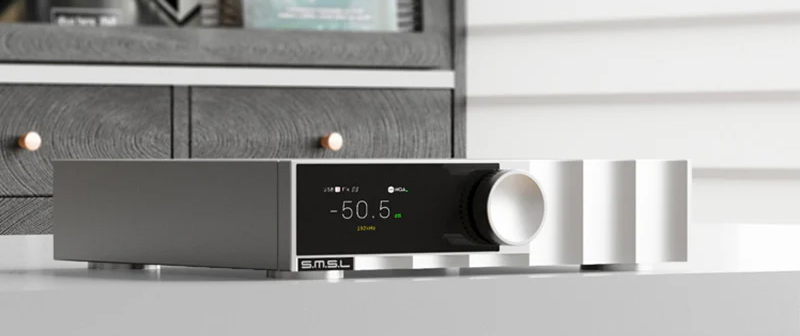
The good news is that you don't need to choose between them. Modern DACs such as the SMSL D200 are designed to support both PCM and Native DSD decoding, allowing listeners to enjoy virtually any digital music source without worrying about compatibility.
This article explains how PCM and DSD work, their key differences, and why support for both formats is becoming increasingly important in today's Hi-Fi systems.
What Is PCM?
PCM stands for Pulse Code Modulation, the most widely used digital audio format in the world. Since the introduction of the Compact Disc (CD) in the early 1980s, PCM has become the foundation of nearly every digital audio system.
Today, almost every type of digital music is based on PCM, including:
- Audio CDs
- FLAC downloads
- WAV files
- AIFF recordings
- Apple Lossless (ALAC) Most music streaming services
Even many compressed formats such as MP3 and AAC are created from original PCM recordings.
Unlike analog audio, which is a continuous waveform, PCM converts sound into a series of numerical values. This process involves measuring the analog signal thousands of times every second. Each measurement becomes a digital sample that represents the amplitude of the waveform at a specific point in time.
When these samples are played back in sequence, the DAC reconstructs the original analog waveform with remarkable accuracy.
Sample Rate
One of the most important PCM specifications is the sample rate.
The sample rate indicates how many times the analog signal is measured every second.
Common PCM sample rates include:
| Audio Format | Sample Rate |
|---|---|
| CD Quality | 44.1 kHz |
| Video Production | 48 kHz |
| Hi-Res Audio | 96 kHz |
| Studio Master | 192 kHz |
| High-End DAC | 384 kHz |
| SMSL D200 | Up to 768 kHz |
Higher sample rates allow more information from the original recording to be captured, especially at higher frequencies. While human hearing generally extends to around 20 kHz, higher sample rates can simplify digital filtering and preserve transient detail during recording and playback.
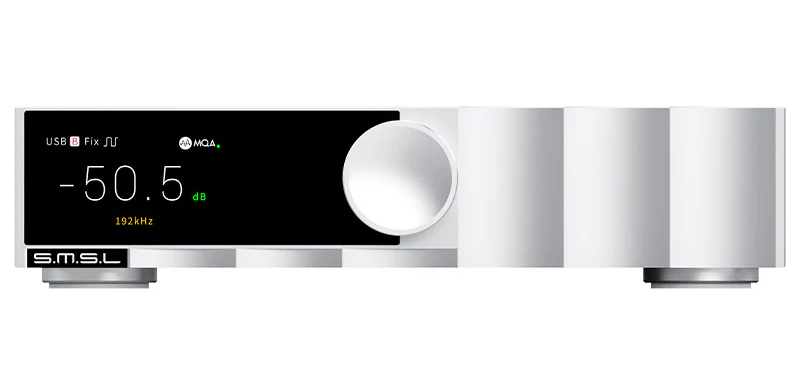
The SMSL D200 supports PCM playback up to 32-bit/768kHz via USB, providing compatibility with virtually every commercially available PCM recording.
Bit Depth
The second important specification is bit depth.
Bit depth determines how much information is stored in every digital sample.
Common bit depths include:
| Bit Depth | Typical Usage |
|---|---|
| 16-bit | CD Audio |
| 24-bit | Professional Recording |
| 32-bit | Studio Processing & High-End DAC Support |
A higher bit depth allows the system to represent quieter sounds more accurately while increasing dynamic range and reducing quantization noise.
For this reason, professional recording studios generally work in 24-bit or 32-bit, even if the final music is later distributed at lower resolutions.
Why PCM Remains the Industry Standard
PCM has become the dominant digital audio format because it is extremely flexible.
Nearly every professional recording studio, digital audio workstation (DAW), streaming platform, and music download service uses PCM during recording, editing, mixing, mastering, and distribution.
Another major advantage is compatibility. Almost every DAC, music streamer, computer, smartphone, television, and media player can decode PCM audio without any special configuration.
This universal support makes PCM the default choice for everyday listening, whether you are streaming music online or playing locally stored lossless files.
For listeners using the SMSL D200, PCM playback is fully supported across USB, optical, and coaxial inputs, ensuring excellent compatibility with a wide range of digital sources.
What Is DSD?
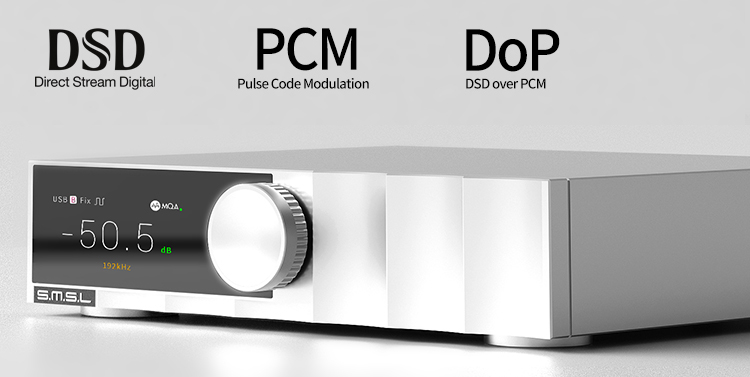
Unlike PCM, DSD (Direct Stream Digital) uses a completely different method to represent audio.
Developed by Sony and Philips for the Super Audio CD (SACD) format, DSD was designed to preserve the original analog waveform using an extremely high-speed 1-bit data stream.
Instead of recording the exact amplitude of the signal, DSD simply records whether the waveform is moving up or down. Every sample contains only one bit of information:
- 1 = the signal is increasing.
- 0 = the signal is decreasing.
Although this seems much simpler than PCM, DSD compensates by sampling the signal millions of times every second.
For example:
| DSD Format | Sampling Frequency |
|---|---|
| DSD64 | 2.8224 MHz |
| DSD128 | 5.6448 MHz |
| DSD256 | 11.2896 MHz |
| DSD512 | 22.5792 MHz |
Compared with PCM, DSD uses a much higher sampling frequency but only one bit per sample. This unique design gives DSD a very different signal structure while pursuing the same goal: reproducing music as faithfully as possible.
Why Does DSD Use Such a High Sampling Rate?
Since each DSD sample contains only one bit of information, far less data is stored in every individual sample compared to PCM.
To compensate for this limitation, DSD dramatically increases the sampling frequency.
For example:
- CD Audio (PCM) samples 44,100 times per second
- DSD64 samples 2,822,400 times per second
- DSD512 samples 22,579,200 times per second
This extremely high sampling rate allows DSD to recreate subtle changes in the original waveform while pushing quantization noise into ultrasonic frequencies through a process known as noise shaping.
Because these ultrasonic frequencies are beyond the range of human hearing, they can be filtered out by the DAC during playback, leaving only the audible music signal.
Native DSD vs PCM Conversion
Not every DAC processes DSD in the same way.
Some entry-level DACs automatically convert incoming DSD files into PCM before decoding them. Although this works perfectly well for most listeners, it means the original DSD bitstream is no longer preserved throughout the entire playback chain.
High-performance DACs such as the SMSL D200 support Native DSD, meaning the original DSD signal is decoded directly without first being converted into PCM.
According to the official specifications, the D200 supports:
- Native DSD64
- Native DSD128
- Native DSD256
- Native DSD512
through its USB input.
For users with dedicated DSD music libraries, this ensures the playback software can transmit the original DSD data directly to the DAC.
What Is DoP?
You may have noticed another specification on the D200:
DoP64
Many people mistakenly believe that DoP (DSD over PCM) converts DSD into PCM.
In reality, this is not what happens.
DoP simply packages the original DSD data inside a PCM-compatible transmission frame. The music itself remains DSD from beginning to end.
This method was developed because some digital interfaces were originally designed only for PCM audio.
By placing DSD data inside a PCM "container," computers and digital transports can send DSD to compatible DACs without altering the original audio.
When the signal reaches the DAC, the DoP packaging is removed and the original DSD bitstream is decoded normally.
Why Does USB Support DSD512 While Optical Does Not?
One question many users ask is:
If my DAC supports DSD512, why can't I play DSD512 through optical?
The answer lies in bandwidth.
USB was designed to transfer large amounts of digital data at very high speeds.
Optical (TOSLINK) and coaxial (SPDIF), on the other hand, were originally created for standard PCM audio and have much lower bandwidth limitations.
Because of this:
- USB supports PCM up to 32-bit/768kHz and Native DSD512.
- Optical and coaxial support PCM playback and DoP within their available bandwidth.
This is why USB is generally recommended for users who frequently play high-resolution PCM or DSD music files.
PCM vs DSD: Which Format Is Better?
Both PCM and DSD are capable of delivering outstanding sound quality, but they were designed with different priorities.
| Feature | PCM | DSD |
|---|---|---|
| Encoding Method | Multi-bit sampling | 1-bit stream |
| Maximum Rate (D200) | 32-bit / 768kHz | DSD512 (22.5792MHz) |
| Recording & Editing | Excellent | Limited |
| Music Streaming | Excellent | Rare |
| Studio Production | Industry Standard | Limited |
| SACD Support | No | Yes |
| File Formats | FLAC, WAV, AIFF | DSF, DFF |
For everyday listening, PCM remains the most practical choice because nearly every streaming service, download store, and recording studio uses PCM.
DSD, meanwhile, remains popular among audiophiles who own SACD collections or dedicated DSD recordings.
From a sound quality perspective, there is no universally "better" format.
A well-recorded 24-bit/96kHz PCM album can sound every bit as impressive as a DSD recording. In many cases, the quality of the original recording, the mastering process, and the DAC's analog output stage have a greater impact on the listening experience than the format itself.
This is one reason why modern DACs like the SMSL D200 support both PCM and Native DSD—allowing listeners to enjoy virtually any music library without compatibility concerns.
How the SMSL D200 Handles High-Resolution Audio
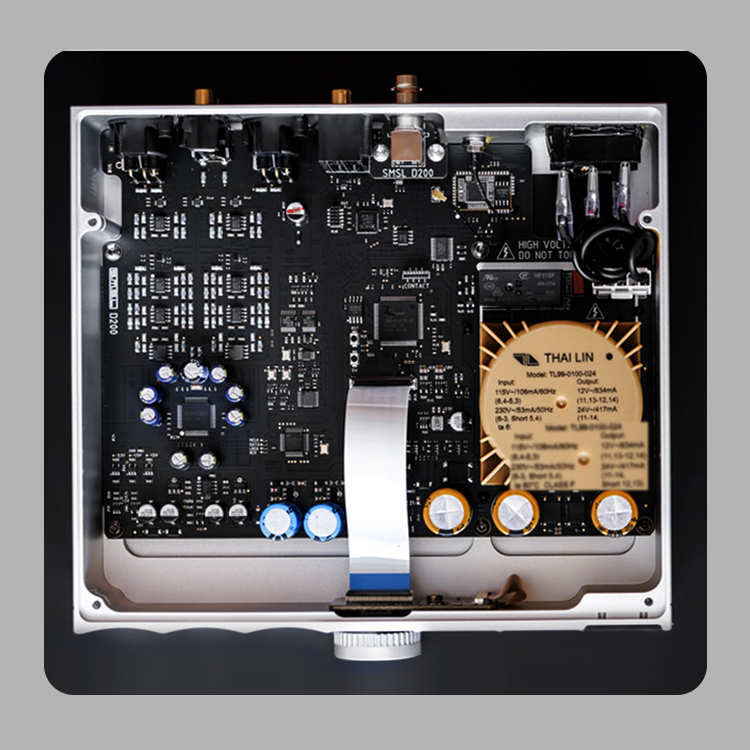
A DAC's supported audio formats are only one part of the equation. The way those formats are processed internally has an equally important influence on overall performance.
The SMSL D200 is designed to decode both PCM and DSD efficiently while maintaining low distortion, low noise, and excellent channel separation.
At the heart of the D200 is the third-generation XMOS XU316 USB processor, which provides sufficient processing power and bandwidth for today's highest-resolution digital audio formats.
According to the official specifications, the D200 supports:
- PCM up to 32-bit / 768kHz
- Native DSD up to DSD512
- DoP playback through optical and coaxial inputs
- USB asynchronous transmission
- Balanced XLR and RCA analog outputs
This wide format compatibility allows the D200 to work seamlessly with computers, music streamers, CD transports, and other digital audio sources.
Connectivity for High-Resolution Playback
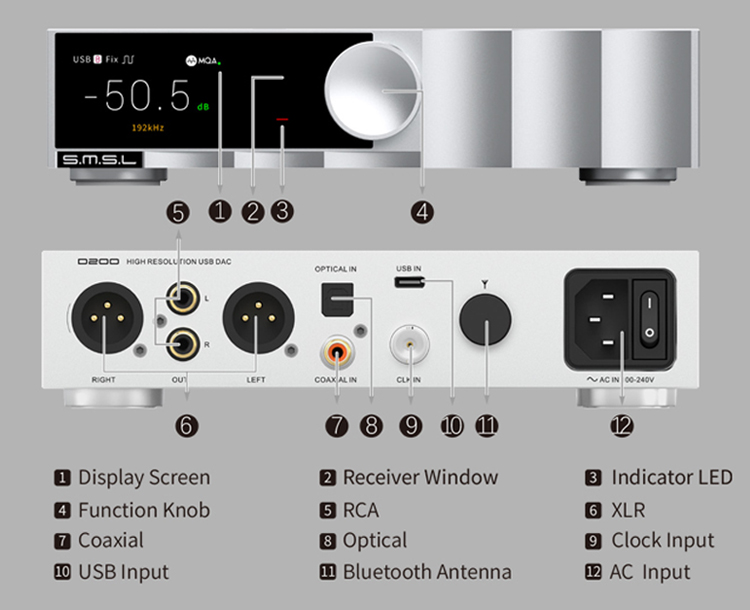
The D200 includes multiple digital input options, allowing users to connect a wide range of playback devices.
Digital inputs include:
- USB
- Optical (TOSLINK)
- Coaxial (SPDIF)
Analog outputs include:
- RCA
- Balanced XLR
Among these interfaces, USB offers the highest data bandwidth and is the recommended connection for high-resolution playback. It supports the D200's full decoding capability, including PCM up to 32-bit/768kHz and Native DSD512.
Optical and coaxial inputs remain excellent choices for standard PCM playback and are also compatible with DoP, providing additional flexibility when connecting CD transports, TVs, game consoles, and network streamers.
Official Technical Specifications
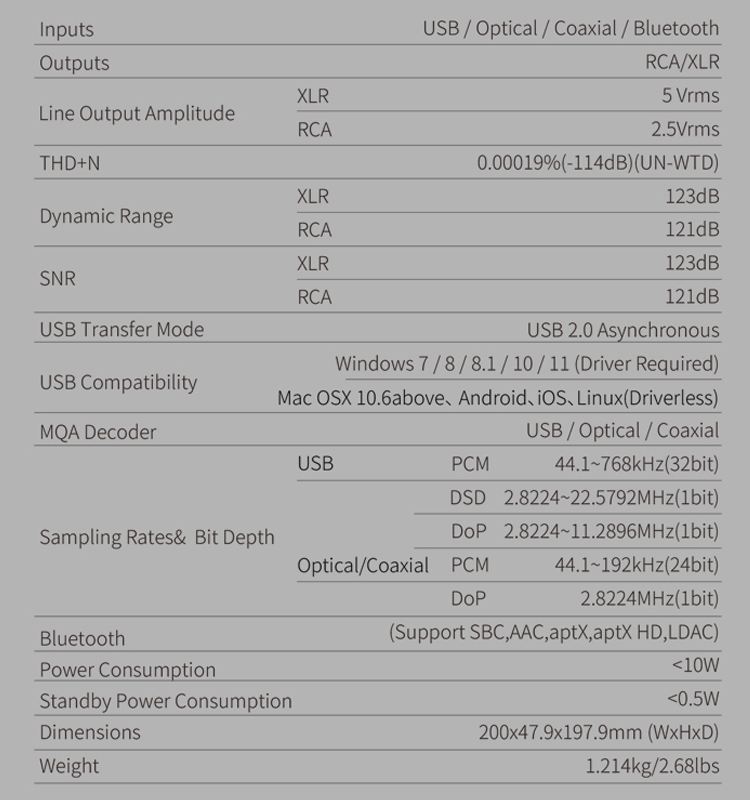
Beyond format support, overall DAC performance depends on several measurable specifications.
According to the official SMSL specifications, the D200 offers:
| Specification | Performance |
|---|---|
| PCM | Up to 32-bit / 768kHz |
| Native DSD | Up to DSD512 (22.5792MHz) |
| THD+N | 0.00019% (-114dB) |
| Dynamic Range | 123dB |
| Signal-to-Noise Ratio | 123dB |
| USB Interface | XMOS XU316 |
| Outputs | RCA + Balanced XLR |
| Bluetooth Codecs | LDAC, aptX HD, aptX Adaptive, aptX, AAC, SBC |
These specifications demonstrate the D200's ability to reproduce high-resolution digital audio with exceptional accuracy, low distortion, and a wide dynamic range.
While specifications alone cannot fully describe how a DAC sounds, they provide useful insight into its engineering performance and compatibility.
Frequently Asked Questions
Is DSD better than PCM?
Not necessarily.
Both PCM and DSD can deliver excellent sound quality. In most listening situations, the quality of the recording, mastering process, DAC implementation, amplifier, and speakers has a much greater impact than the choice of format itself.
Why does DSD have a much higher sampling frequency?
Because DSD stores only one bit per sample, it compensates by sampling the signal millions of times every second.
For example:
· PCM CD: 44.1kHz
· DSD64: 2.8224MHz
· DSD512: 22.5792MHz
What does Native DSD mean?
Native DSD means the DAC decodes the original DSD bitstream directly without first converting it into PCM.
The SMSL D200 supports Native DSD512 through its USB interface.
What is DoP?
DoP stands for DSD over PCM.
It does not convert DSD into PCM. Instead, it packages DSD data inside a PCM-compatible transmission frame so that compatible interfaces can transport DSD audio.
Which connection should I use for DSD playback?
USB is recommended because it supports the highest bandwidth and allows Native DSD playback up to DSD512.
Does Spotify use PCM or DSD?
Spotify streams compressed audio based on PCM.
Most streaming platforms—including Spotify, Apple Music, Amazon Music, and Qobuz—deliver music using PCM-based formats rather than DSD.
Can I hear the difference between PCM and DSD?
Some listeners report subtle differences, while others hear little or no distinction.
In practice, recording quality, mastering, headphones, speakers, room acoustics, and the DAC's analog output stage usually have a greater influence on sound quality.
Do I need a DAC that supports both PCM and DSD?
If you mainly listen to streaming services or FLAC files, PCM support is sufficient.
However, choosing a DAC that supports both PCM and Native DSD provides greater flexibility and ensures compatibility with virtually every high-resolution music format available today.
Conclusion
PCM and DSD represent two different engineering approaches to digital audio reproduction.
PCM has become the global standard for recording, editing, streaming, and digital music distribution because of its flexibility and universal compatibility. DSD, on the other hand, remains popular among audiophiles and collectors of high-resolution recordings thanks to its unique 1-bit encoding method and support for SACD.
Rather than competing technologies, PCM and DSD complement one another. A modern DAC that supports both formats gives listeners the freedom to enjoy virtually any digital music library without worrying about compatibility.
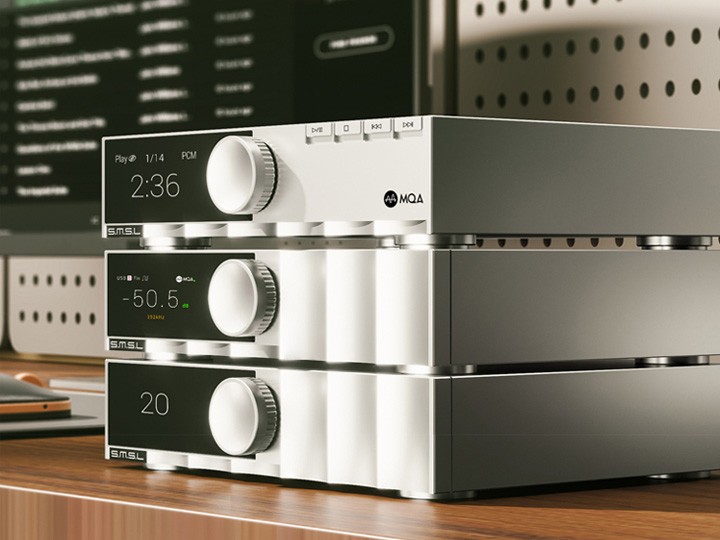
The SMSL D200 is designed with this flexibility in mind. With support for PCM up to 32-bit/768kHz, Native DSD512, and a high-performance USB interface, it is fully equipped to handle everything from standard CD-quality recordings to today's highest-resolution audio formats.
Whether you're building your first desktop Hi-Fi system or upgrading an existing setup, understanding the differences between PCM and DSD will help you make more informed decisions and get the most from your digital music collection.